“Survival of the Friendliest” with Dr. Brian Hare & Vanessa Woods


















Is your dog smarter than you?
Can bonobos show you how to share your love?
And what did Darwin really mean by “Survival of the Fittest”? That only the strong survive in the race to the top? Or does “fittest” really mean friendliest and, in a way, sexiest? If so, what does that say about the history and precarious future of humanity?
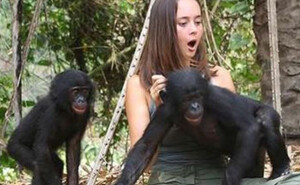
In this fascinating, fun, science-rich Bedside Chat of the Coronapocalypse (#25), I interview Duke University Professor of Evolutionary Anthropology, Dr. Brian Hare, and award-winning journalist/research scientist, Vanessa Woods (married bonobo and dog experts whom I’ve known over ten years!) about their amazing new book “Survival of the Friendliest: Understanding Our Origins and Rediscovering Our Common Humanity.”
Learn the natural, evolutionary secrets of our closest Great Ape cousins, the Make-Love-Not-War bonobos, and our four-legged best friends, our very own beloved dogs, that will help you be a friendlier, sexier, more peaceful and sustainable human being… AND help save the world from imminent Anthropocene dissolution!
Also featuring Chico the Pomeranian Power Puppy, Congo the Retired Service Dog (Golden Lab Mix) and a lot of friendly bonobos in the wild, at Lola ya Bonobo Sanctuary and in the San Diego Zoo.
Read more on https://drsusanblock.com/survival-of-the-friendliest
Save the bonobos! Donate to bonobos .org
Need to talk? Call the Dr. Susan Block Institute anytime 24/7: 626.461.5950
Full transcript of “Survival of the Friendliest” with Dr. Brian Hare & Vanessa Woods on The Dr. Susan Block Show:
your family is all good everybody's hanging in there we've stayed safe somehow you said you re-read our book my goodness yeah well you probably you probably know better than i do now all right well you can ask me questions about it and here we go brothers and sisters welcome to a very exciting interview with two people that i'm just so thrilled
to spend some time with Dr. Brian Hare and Vanessa Woods and we'll talk about the hair in the woods later but they just wrote a fantastic new book kind of new survival of the friendliest yes understanding our origins and rediscovering our common humanity and i'm so excited to talk about this book because
well i've known Vanessa i'm going to take off my bonobo mask for this because yes i've known her since i interviewed her in 2010 about her book the bonobo handshake which if you watch the dr. susan block show you know what a bonobo handshake is right but after our interview Vanessa turned me on to sex at dawn by dr christopher ryan to lola ya bonobo
and the heroic claudine andre to her cool sister brawny and she also gifted me with a great review for my book the bonobo way and if you look at the kindle version those photos are mostly hers so she is incredible simply amazing a very friendly human which is why this is a good title and a great writer really the bonobo handshake it's about the democratic republic of congos
incredibly complex and devastating ongoing wars as well as the only great ape who doesn't murder let alone make war and that would be the bonobo of course i've been in love with bonobos for a long time since 1993 which was 15 years before i read bonobo handshake but it really deepened my love for our kiss and cousins yay the bonobos who swing
from the trees as well as with each other but i really appreciated the desa's deep understanding of bonobos and also unlike a lot of primatologists and other experts and media people venessa impressed me because she wasn't afraid to talk about bonobo sex you know like three in the here she is just barging in like a bonobo into my illustrious introduction but that's perfectly
wonderful just swing on in here venessa was her co-writer on this book survival of the friendliest is the illustrious dr brian hair who i feel like i've known as long as venessa because he's like the leading man in bonobo handshake and he's also the fall guy you know for all venessa's problems and yeah he's a great hobby and then when venessa actually got too busy with her kids
because you know occasionally sex does lead to kids well dr brian just stepped in and and answered all of my kind of silly questions about bonobos and what's the research what does it mean as well as really sympathized with me when i got so upset that that dawn of the planet of the apes portrayed coba the most violent ape as a bonobo and that was so bad and brian calm me down gosh these two
have just really exemplified this title and they have another book called the genius of dogs because they're into dogs i don't know if it's as much as bonobos it's in a different way but this title survival of the friendliest is truly genius i just want to give a little credit to brian the dr brian here world-renowned biological anthropologist duke university professor of evolutionary
anthropology founder and director of the duke canine cognition center dog niche and really science superstar so between the two of them venessa award-winning journalist and science researcher and dr brian here we're just overwhelmed with bonobo and dog expertise and also both worked with one of our favorite primatologist anthropologist dr richard rangham who has a place of honor here
in bonoboville being one of the first anthropologists to dare to come on my show to talk about bonobos for which he actually said he almost lost his job at harvard but he did great so brian and venessa have both worked with dr richard and they've come up with this fantastic book survival of the friendliest so welcome to the dr susan block show thank you thank you it's so fun to
be with you again so much fun and it's been like that but it's been you know 15 years i think or exactly the same so do you although we did a radio interview before so we're forgiven if we add or subtract a few years so it's so good to have you here and i did want to see you guys where are you you're in different places well you don't have to give an exact address
but venessa do you want to go first sure i'm in chapel hill north carolina uh with the two children who are the product of sex that we had a while ago right um so they had to go to school two times two times and um yeah and then also um yeah i had to come back for testing a little puppy that we have at the Duke puppy kindergarten and brian where are you uh i am in the mountains of
north carolina in a cavern oh a cabin in the woods a well a hair in the woods going back to your sex before we get back to your sex let's talk about the title of this book because it is a genius title there's a great ring to its survival of the friendliest and you feel you know like you've heard it before but really what you've heard is that great phrase of charles darwin's survival of the
fittest and we don't usually think of fittest as being friendliest we think of that as like physical fitness or maybe being really really smart or just really really competitive or aggressive or powerful but as you say that is not really what survival of the fittest means and in fact it means friendliest yes um so you're exactly right fitness is as charles darwin
meant it was just your ability to reproduce and darwin saw so many examples of friendliness in nature where you know it was a best strategy it was a winning strategy and so you know over time this phrase is being convoluted with you know the meanest and the strongest and the most physically fit but um you know in the 19th century that's not what it meant and um i think i think it's a
shame because the original meaning is just so much more powerful than that right so survival of the fittest it doesn't mean of the most powerful it might mean of the sexiest right because after all it is about reproduction you got to reproduce uh without sex as you pointed out so yes yes a little bit of natural selection there it's very heartening i feel especially in this day and
age when we're grappling with are we a community we humans or is it one team against the other one country one race one gender against the other and to find out that survival of the fittest doesn't really mean it's all about the competition in fact to a great degree it's about cooperation isn't it yeah so most of the big evolutionary jumps when you step back and you and you look at all of
nature uh and you look at sort of where species have made big jumps in success it's always a story about a new type of friendliness evolving that leads to a new form of cooperation so you can look at anything from flowering plants that are relatively new type of plant and they're providing a gift of food for pollinators to take their sexual material around and allow them to sexually
reproduce better and and they've spread all over the world and have out competed many other plants you can look at there is one terrestrial vertebrate that stays in Antarctica year round other than humans a native which is those big beautiful emperor penguins and the secret to how they do that is they huddle together all winter so they are attracted to each other
they hug each other all winter and they stay warm so this type of friendliness of staying close and hugging is what allowed them to win and be the only species uh that's a vertebrate that can be in Antarctica all year round and bonobos are another example of this uh the most successful bonobo male is more successful at having offspring than the most successful chimpanzee
even though chimpanzees are very despotic and very aggressive um and have many of the darker traits that um you know we we fight in our own species yeah well you know nice guys finish first in bonoboville that's right right so you're talking about the flowers and the plants cooperating with the animals and ants of course cooperate uh not your aunts and uncles they probably don't
cooperate so much but the you know the the ants and the anthills this is a key to human success I mean you you talk about how we broke off from the bonobos and the common chimps we humans about six million or nine million years ago and then there were a bunch of other species that were kind of like us like neanderthals and homo erectus and we kind of kept going
while they died off not because we beat them up but because we cooperated because we were friendly with each other and we knew how to build things and get places is that kind of a synopsis right I mean yeah that that's exactly right and puts so well um the the question that we are usually asking is that you know what does it make us human but another question is equally
important and just as mysterious is what is that makes us the human because as you said there are a least four other human species in the time that modern humans or homo sapiens have been around and what was it that allowed us not just to thrive but to flourish and why aren't there any other neanderthals walking around right now and you know usually the neanderthals are a great example
because they were bigger than we were they were stronger they had brains that were at least as just as big as us maybe they were even bigger they had culture um there's some evidence they had language they had all the same toolkit that we did so if it wasn't technology and it wasn't their strength then you know why why did we win and you're exactly right we think it was because we
have a unique form of cooperation and we were able to cooperate in ways and be friendly within between groups in ways that the other humans could not and uh that's what that's why we're here right and sometimes you call this ability to cooperate and to socialize a kind of self domestication and we're going to talk more about how bonobos and dogs do this
we're so excited to talk about bonobos and dogs two of our favorite species oh besides human we love our fellow humans too but there is a flip side that I just want you to mention to at least human nature and that is that when you're really nice and friendly with your in-group you might be kind of mean to people that you consider in the out group the flip side of friendliness
is this terrible cruelty that we also find in humanity talk about that a little bit yeah so um the when you look at humans uh what we think the type of friendliness that allowed us uh sort of outcompete all the other humans that weren't as friendly as we are uh was an attraction to strangers who we could see as having some uh signal of being in our group so even though we'd
never met even though you may not have met somebody before maybe they speak the way you do maybe they like to eat the food you do maybe they wear their hair the way that you do and you can instantly be friends with them they can be you recognize them as part of your group but the problem is that while we have this new type of friendliness it allows us to expand our
social group we can learn from more individuals um it means that our technology can go more rapidly than the other species of humans who were not attracted to these types of strangers in fact they were just afraid of all strangers um the problem is that uh while we began to love our in-group even strange in-group members who we just meet and became friends with
we begin to love them as if they're family well then when they're threatened we want to protect them and when the thing that scares us the most is when they're threatened by a group that's not our own group an out group and so we have while we have psychology to be super friendly we also have psychology to protect though that in-group we love and if our identity is
threatened that in-group identity is threatened then uh potentially uh the worst or darker side of our nature comes forward so then the question becomes well how do we keep that from happening right and that's a lot of what your book gets into it's not all bad to protect those you love and to have a sense of defending yourself but often it does seem to get out of control in our society
especially after the agricultural revolution where farming has led to capitalism has led to all this crazy competition that maybe we're not really cut out for we humans but we're doing it and so here we are grappling with each other and trying not to get each other's diseases and some of us are shooting each other and some of us are dropping bombs on each other and this is all
bad so we want to try to be what I would say more bonobo or just let's say more peaceful and more understanding more friendly and you get into various exercises and games and things that people can do and play especially young people like these jigsaw arrangements which I will say is also done now more and more among adults when we have conventions is we don't just
give a dissertation on something we might break up into groups and the group has to solve a problem and when everybody in the group has to solve a problem you have to be nicer to all the people in your group or you don't get your problem solved and this kind of teaches you that friendliness that you're talking about here so what Brian was talking about with when you're threatened by
someone who's not part of your group who you don't see as part of your group this has happened throughout human history and what you're what you were talking about in the book is the the best and one of the only ways because we've understood this part of our nature for hundreds of years and so you know people have been coming up with all sorts of solutions like what is it we do
or how do we you know get over these these um this dehumanization ability that we have and one of the only things that social psychologists psychologists and others have found is that becoming friends with someone from another group is one of the quickest way to short circuit that dehumanization and to see them as others so when you're in school the idea is that I mean
it's it's kind of the same concept that we have for our dogs is that the more people and the more dogs you introduce your dog to when they're young the more tolerant they'll be when they get older so that's what the jigsaw the jigsaw cooperation is all about it's all about like reaching across the divide and making friendships all right well speaking of dogs let's talk about dogs we actually
have someone here who would like to learn a little more about himself chico yes chico oh hey chico so chico this is brian and venessa and they are dog experts and yes we have a little bit of peanut butter for you to calm down and so we really love how you're into animals dogs and bonobos being two of our favorites as well as
a human animal because we are animals too we humans are definitely animals and we often forget that we are and maybe that's one of the sources of a lot of human problems is forgetting that we are animals just like chico here and having a dog being with a dog often puts you in touch with your animal nature and of course dogs are very in touch with humans and so tell us a little bit about that brian you were
raised by a labrador retriever i understand just like romulus and remis were raised by a wolf yeah we're we love dogs and we're and but we also are interested in uh understanding dogs because they can teach us a lot about ourselves just like you were saying and one of the things we've learned is the secret to the success of dogs is there and it's not a surprise to anybody they're
social genius their ability to understand us to communicate in ways that other animals don't but the reason they're able to do that is because they're tolerant and they're very attracted and interested in being near us and bonding with us in a way that other species are not so it goes back to that friendliness that is the key to their cooperative
relationship with us and we know that through evolution through the process of domestication that chico and every every other dog like chico actually went under selection and they were selected to be friendly and interested and want to bond uh with humans and so or become very good at bonding with humans i should say and and so that's what allows them to then be able
to communicate and solve problems with us in ways that other animals can't and anything in particular about pomeranians being gorgeous i mean you're a gorgeous dog for you in your show gorgeous personality gorgeous and what they look like i mean come on and smart although i guess there's a genius to every kind of dog right just like there kind of is to every
kind of human yes definitely definitely and dogs have this what you call theory of mind where they can sort of read your mind fine you can i say you oh okay yes sure um so dogs do have the ability to read the uh to have thoughts and feelings and beliefs about the thoughts feelings and beliefs of others so they have these these theory of mind abilities and that's really comes
down to reading your body language reading your intentions when it comes to your body language um you know chico just sitting so adorably on your lap knows that you're trying to help him and they're trying to give him peanut butter and that is one of the keys to the strength of our relationship is that you know dogs can tell when you're trying to help them um and especially when
you're trying to help them towards a goal that they have um and that's something that even chimpanzees and bonobos struggle with oh wait Brian can bonobos do it i know chimpanzees struggle uh you mean the cooperative communicative part of it yeah yeah um yeah in some of the games we play that are based on games we play with kids but infants um and and that's not how we know
that dogs are doing something unusual is that they're passing some tests for cooperative communication that uh human infants pass uh right as they begin to acquire language and chimpanzees and bonobos are not very good at those games so dogs are really uh unusual in their ability to uh understand us well as you say dogs survive by communicating with people bonobos
aren't dependent on people to survive and certainly common chimps aren't and yet dogs are i mean wolves they're on their own and hey it's sad it really sad we love wolves but wolves are highly endangered and dogs are not and dogs are not endangered because they've learned to communicate with humans to get us to take care of them i mean one of the reasons i think humans love
dogs is we feel we can control dogs like we can't control each other but really dogs are controlling us in a way getting us to take care of them and give them a purpose in life and their domestication is what has enabled them to survive and thrive these these wonderful doggies right they are the second most successful mammal on the planet besides us so friendliness
for them is definitely a being a good strategy and to your point i've been scooping up all day long uh we have a little puppy here and i've got what are we doing brian we're getting up to like two four six in the morning take her out to the bathroom yeah there is not another human and i would do that for besides my children so we don't even eat them it's not like raising
farm animals for our own purposes useless you can't eat them they don't really do anything i mean what do they really bring to the table just their you know love without children love i cuddles acceptance without expectations yeah a lot of beautiful things so you know if you value those things and i just want to have you say where dogs got this way because i used to always think humans
had you know domesticated dogs like around the time we started farming that we domesticated dogs but that's not the case dogs domesticated themselves so that they could be near us and get all of our wonderful garbage yeah no that's right um so so at some point uh late in human evolution probably between 15 and 40 000 years ago uh wolves were interacting with a population of humans in a new
different way they became attracted to the humans they wanted to be mere humans which is really counterintuitive because humans have at this stage have very good weapons and are competing for food with wolves um but as they began to be attracted to humans then uh there was amazing opportunity to eat uh garbage and scraps and all sorts of other things um and it would be
regularly available and so all you had to do was get over your fear and be attracted to humans and you'd have access to all that new food and so that was the selection pressure that with the friendliness of being attracted to humans that then led to the beginning of domestication and while chico's sitting in her lap right now is uh 15 of 40 000 years ago some wolves decided
hey you know what i'm just going to go get some garbage instead of go hunting you hear that little wolf it's the garbage and yes chico loves garbage he will go after garbage all the time all over the floor okay so we'll come back to her but let's talk about bonobos i found bonobos for myself when i first saw them on a pbs special was 1993 and i thought wow they're so sexual and peaceful
and female empowered i just thought everyone would fall in love with bonobos and they would become the next big thing and boy was i wrong i just i am just amazed i guess i misjudged the puritanical propensity of the media and academia but certainly when you guys got involved in like 2010 or something or 2008 you did turn that around in your very wholesome family oriented way you said
yes bonobos are really cool and yes they have a lot of sex but they also do these other things but yes they have a lot of sex that was a turning point well we're just so grateful to you susie because you really just paved the way for us you are one of their longest and most original supporters even back before anybody was talking about bonobos and just to clarify bonobos are actually very famous
in france um the french you the love bonobos then bonobos are more well known over there the chimpanzees it does seem to be the um uh english western media that seems to be a little bit hesitant to talk about bonobos and sex but as you said there's lots of lots of animals that have sex and bonobos just have sex in just a really super friendly and creative way and that's not
because i remember brian also said on christopher ryan's show that he told anderson cooper you know sex is not the most interesting thing about bonobos because of course anderson is horny like me so he's like let me see him have sex let me have sex and so i'm also interested in that part because i'm a sex therapist but also yeah sex is interesting and i think a lot of people find it interesting
and that is what makes some people interested in bonobos maybe not other people like people that are speaking officially they don't want to come across like their sex maniac but a lot of people are interested because of the sex and then of course there is the most interesting thing about bonobos which is that they've never been seen killing each other in the wild or captivity
this is really interesting because common chimps do kill each other they even make a kind of war and gorillas have infanticide orangutans kill each other not so much but sometimes but bonobos never do humans do of course a tremendous amount the most but the fact that bonobos don't is really amazing considering how close they are to us and they seem to use that sex in order
to keep the peace so yeah sex is a really a bonding mechanism in bonobos it's a it's a strategy to avoid conflict and to feel together to feel friendly and that's why we call it the bonobo handshake because it's just it's not a big deal for them it's like hey you know how are you i'm you know i'm friendly i'm friendly we're gonna be friends and this is how we're gonna do it
and so you know when two groups of chimpanzees meet each other if they're strangers and from different territories as you said it can get really violent really quickly but bonobos they just you know they meet two large groups they'll have sex they'll show food they'll hang out and just travel with each other for a couple of days right and they really do teach us about sharing about
how natural it is to share and yeah they do share sex and i'm not saying we should all be sharing so much sex although maybe we should but i i guess what i'm saying is it's good to recognize that that's a part of who we are and also to recognize that when we say sex with bonobos we're mostly not talking about intercourse we're mostly not talking about what led to those babies we're talking about
what i call outer course what some people might call foreplay or frottage i like the term outer course just because it makes it clear that this is a form of caressing touching licking rubbing massaging that really doesn't involve much penetration but is very sexual and very orgasmic some primatologists have said well then it's not sex if it's not intercourse but i think it is
being a sex therapist i know that what gives most humans pleasure is usually not the old in and out but all the other stuff dolphins too i think the official scientific term for it is socio sexual behavior so it's a sex that is like outer course better sorry because he gets better with words than scientists
well we can use both the whole genitogenital rubbing that the females do and they are all very i guess bisexual or pansexual bonobos so the females rub against each other one primatologists didn't call that sex but i call that sex uh scissoring is something that has been called and they have orgasms from doing that and i like the mogandu term hoka hoka
better than genitogenital rubbing well and and so on gg rubbing i mean the other thing is to understand is that their genitalia has actually evolved so females have their clitoris have evolved to be more ventral facing and and it actually aids in their ability to rub together so chimpanzee clitoris are more dorsally facing when they they don't have the ability to
pleasure each other in the same way so anyone who would say that it's not somehow sexual is missing the point because i mean why would there be anatomical change if if that wasn't something that was dramatically important to the species and so they they certainly um you know rub their clitoris is vigorously have orgasm and uh you know it could be quite
intense when you when you see it uh you know obviously we haven't been able to measure uh and and how would you even demonstrate uh that another species has an orgasm but uh there's no reason to think that they're not and and the um uh the other thing that's really a couple of interesting things uh venessa famously uh and i did a study um i think you must have talked about
maybe you talked about that stuff you interviewed is bonobos are really uh born ready or prepared to have uh these social sexual interactions or outer um course because even young infants um are already prepared and uh do these behaviors as a bonding um uh technique to facilitate friendship and then the last thing is that um when there are are new groups of bonobos that meet each other neighbors
that that are maybe strange to each other um famously they'll have uh sexual uh interactions with each other but what's what's a new finding is that um if there's an immigrant female who moves into a new group of bonobos she if it was a chimpanzee the females would attack her they would violently um try to have her um move away back out of their group but if bonobo females that
female actually becomes the preferred socio-sexual partner and the preferred uh female is the new female who joins the group the new girl in town hey yeah the new girl down that's right i want to speak to two points there first of all in terms of you know the babies and yes they do have sex a kind of outer-course type sex i would just want to say i believe that the bonobos are great
inspiration to humans that's the bonobo way is to inspire us to be more sex positive more peaceful more female empowered and more cognizant of male well-being but that doesn't mean bonobos are a blueprint for how humans should be not at all we shouldn't live in trees well some of us maybe but we shouldn't be having sex with our children and bonobos do that and so we have to be able to
understand that they do things that we don't do and that we shouldn't do and yet they are still an inspiration to us and that's important okay now that i got out of that i want to yeah bonobos bonobos do not yeah no that's good and to be clear bonobos don't have norms social norms they don't have morality like we do um and so um you know obviously um uh i couldn't agree
with you uh um you know more right they don't have morality like we do but they have a certain i guess ethics ethical hedonism they don't kill that's their morality one very important point of morality and okay chico we could talk about bonobos now not about you so you can go bonobos as you were saying are also very baby dominant i mean i think of them as female dot
well female empowered and the babies have a lot of power because the females have a lot of power or maybe you could say the females have a lot of power because they respect the babies so much but it's all very connected isn't it i think you put it so well they are female empowered and baby dominant if there is a baby in the group that wants something that baby will get it and so
it is just this kind of like topsy turvy chimpanzee world in bonobo land where they really do treasure their babies and you know and that means that unlike all the other great apes they're that the infants won't be harmed or killed and that is because the females have such strong bonds that they're able to defend their babies against any kind of male aggression
and this is very unusual and just to your earlier point you know bonobos are not a model for humans what they are is that they have a mechanism in order to overcome any kind of violent tendencies males in the group between each other they have a mechanism to diffuse tension and i think that that's what we really need and that is what is so important and
when you first went to the democratic republic of congo you you were trying to find out like what is going on with human war your father had been in the vietnam war and that had a profound impact on you as it had on a lot of people and all these wars have terrible impacts on people and you went there to find out in part also you went there because your husband brian was going there
but you also wanted to understand war and you discovered these fabulous creatures that do not make war it was such a perfect contrast because you know the most peaceful species in the world lives in one of the most war torn countries and it's true that's something that humans do there were there's there's war everywhere it's not just one part of the world i mean the democratic
republic of congo's war was particularly awful but because of all the international actors like australia and the us and you know france and the rest of europe so i mean just to have this this animal that i'd never heard of i wasn't like you susie i came to the numbers quite late but um to know that this was this great eight that shared 98.7 percent of our dna and had
managed to short circuit this this tendency we have to kill each other was just so fascinating to me and i wanted to you know find out more about them and figure out how they were doing it something that you know for all our technology and all our intelligence we haven't managed to do yet so just briefly i mean a lot of people might wonder why are they like this and we don't fully know but
dr richard rangham and maybe some other people came up with this idea of the food abundance that were the was the lot for bonobos because bonobos were on a certain side of the congo river and the common chimps were on the other side and when they split off bonobos stayed in this rainforest of abundance and therefore the females could afford to hang out together
and not be so competitive and the males could afford not to be so competitive these bonobos developed this peace through pleasure as i call it society in this land of honey and milk and abundance yeah it really is true i mean um i venessa has seen and i have seen quite often where there's some uh some kind of disagreement um and in chimpanzee land there would be a horrible fight
and instead uh bonobos end up uh as you say uh having a pleasurable experience together and as the conglis say they negotiate uh using sex uh and then they don't have a fight and they go off and you know everything's fine again um so i have uh you know it is hard to not be astounded and as you said inspired by the fact that um they can use this as their mechanism um and i
hate to return to the babies again but but i just have to tell a couple of uh uh you know news stories and this is an um this this is about how babies are dominant in that um it's incredible because we did find that some of the most dominant individuals in bonobo groups are the infants and the reason is because if i like your baby bonobo um if uh if an infant bonobo is in trouble
all of the females come to to protect them and one of the other uh this is a brand new finding from wamba um that uh and it goes to their friendliness uh with strangers is for the first time ever bonobos were observed adopting orphan infants from other groups who had been abandoned and uh the females took them and raised them as their own um uh because infants are so
central and protecting uh infants and so uh you were you were asking the question well how did this peaceful society uh have come to be and richard had uh professor rango has this idea about food but uh the mechanism we think uh that played a role is sexual selection that females had more food and that allowed them to have uh friendships they can protect their babies uh in a way that
chimpanzee females can't and it empowered them exactly as you said and they could then have a preference for friendlier males and females prefer friendlier males we do they do we do we we do too i think human females do too but anyway go on yeah so bonobo females have a really strong preference for friendly males who are not aggressive towards babies or towards the other females um
and so that's why uh the friendliest males uh it ends up that all the females prefer the same male and and male bonobos that are successful and preferred by the females actually have more offspring than the most successful big powerful despotic chimpanzee um and so that's what we happen is that females were empowered and through sexual selection they preferred friendly males
and friendly males passed on their genes for friendliness and you ended up with a species of incredibly friendly non-aggressive males who use uh sexual behavior as part of their way to stay peaceful yes nice guys finish first and i would just want to say those bonobo males they're very friendly with the females they have a lot of milfs friends of their mother uh who have
sex with them their mother doesn't actually that's the one relationship that where they don't actually have intercourse but i guess they do a lot of hugging and stuff but they do have sex with mom's friends and of course as you said earlier the new lady in town is always very popular and when they fight they have sex with each other okay there's this kind of thing they do
penis fencing we love that here in bonoboville our bonobo and butt rubbing rump rubbing i guess they don't say but they say rump rubbing and and these guys they're you know they're kind of gay the bonobo way i mean they're i guess pansexual they just like the females will use sex for kind of political social reasons the bonobo males use sex too for their own
political social conflict resolution reasons well a lot of smoke oh sorry go ahead but that's oh i was just about to say sex is a great tension reliever i think that's what we've all learned go ahead brian yeah and i was gonna say the same thing but it's slightly more scientifically and just say one of one of the things we found when we when we were comparing chimpanzees and bonobos
is that counter-intuitively bonobos are more anxious than chimpanzees they become socially anxious more easily and because they become socially and they get more socially anxious when they're separated from other bonobos or if there's if there's any kind of tension in the group they get really anxious and how they then relieve that stress is they often then have some
kind of sexual behavior with one another um and in chimpanzees that's just not what happens they they have an increase in testosterone they don't get anxious they just get really pumped up and wanna fight um you know eventually be aggressive and and uh and fight so why don't bonobos make enemies of bonobos from other tribes i mean we're talking about that flip side of friendliness and humans are
extremely friendly but we also have our means side when we perceive someone to be of an out group another human now when bonobos connect with another bonobo from another tribe they want to have sex share food sometimes they're more interested in the stranger than they are in the friend so what's up with that and can we do that too
so we think that humans what was really special about us that actually led to us being successful is that we formed a new social category that actually no other animal has and that is of an intra group stranger so as someone you see who is a stranger that you know is somehow because bonobos and chimpanzees and all other animals is really simple if you've never seen
someone before or they live in another part of the territory or if they're new they're a stranger but what we've been able to do is we we we can just look some and look at someone and instantaneously sort of like categorize them on all these different fronts in like the blink of an eye and we make judgments about whether or not they are one of us of course we could be wrong
about those judgments we could be wrong but you see them and if you see them as being one of you you're instantly prepared to make friends with them and that is an intra group stranger but the flip side as Brian was talking about is that if you feel that this um that this stranger is somehow a threat to your group then you can be immediately aggressive so bonobos see all new strangers
friends and chimpanzee see all new strangers usually um usually with with trepidation and you know and behavior aggressively towards them but so that's the difference between chimpanzees and bonobos but with humans we have this new social category that's really weird and it allows us to make friends and enemies really quickly yeah so i think that's one way in which i'd like to
take the bonobos as an inspiration i mean not that you can trust anybody really your own family member could shoot you one day if you have enough ammunition stored in the garage but back to sex we do tend to have a sexual attraction for strangers we have an attraction for the exotic we want the new we're curious we humans and i think that our society whether it's our parents or our
religion or our government uh our in-group leaders say no no you shouldn't trust the stranger and i do think maybe there is a little more push from these hierarchical powers over us to try to tamp down our somewhat natural tendency to be attracted to the strange to the new to the exotic and maybe we need to stimulate that again yeah so um i think that this goes back
to what we talked about in the beginning is uh the real um powerful elixir so all these challenges are cross-group friendships that can be bridges across groups and we are attracted to the strangers we are attracted and uh you know exotic is erotic uh you know um and so if if we know that in every human there's this tendency to be attracted to strangers but then also the flip side of that
then we can combat it and you have to say to yourself no wait a second i'm maybe having one of these responses and i should actually go introduce myself or i should be a little bit more patient or um you know maybe i should just try to be friendly and maybe we'll be end up being friends and i'll find out that this is a wonderful person in a way that i didn't know knowledge
is power and sexual knowledge is sexual power and yes this book definitely gives us a lot of powerful knowledge about our good tendencies and our bad tendencies and how we can emphasize the good are there any peace studies departments that study the way bonobos make peace i see all these peace studies i see primatology separate from peace studies why is that that is a very astute
observations i'm so impressed with you you're you know you have the the cutting mind of a scientist uh maybe that's why you're so good at your job but um yeah you're right the so social psychology was really started after world war two really to try and make sense of what happened you know how is it that people could do such terrible things for each other so that's
social psychology really took off and you know primatology of course has been going on for a lot longer and i think people feel uncomfortable with um recognizing ourselves as great apes and i think one of the reasons for that is um the uncanny valley uh you know they're so similar to us but not quite like so the uncanny valley is um one examples if you see a robot and you just
kind of like or you see a mannequin and they just kind of move really slowly you get this really chilly creeped out feeling um it's like you know those evil dolls and that's because they're almost but not quite human so i think that we feel the way towards great apes um differently to all other animals because you know you see a dolphin or you see like a meerkat you're like oh my gosh
adorable but great apes they're they're so similar to us and they're not quite right they make us extremely uncomfortable at times that that's true and you bring that up in your book and it really resonated with me because i've been giving talks about bonobos and the bonobo way for many years and i feel like recently i've had more people saying that they're a little upset
at the simonization that i'm comparing bonobos and all apes to humans and even saying well humans are apes actually and some people are offended by that you have both the religious right who's offended by that because well they just think the world was created in seven days and then you have the woke left that somehow sees our connection to apes as being i don't know i guess racist
yeah so so i think all of that is true is um and i think what what um finesse the uncanny valley touched on is that you know great apes historically um gorillas chimpanzees orangutans not as much bonobos but uh all the other species have been used to um put other groups of people down by by using caricatures or using a comparison to great apes as an insult right um and so there's a long
history of that and unfortunately it's um is pernicious uh and so i think that's uh when you're you know i think i think we're more used to and more familiar with sort of a response uh people who would be you know fundamental uh christian or something be uncomfortable but on the more liberal side where people are um trying to be anti-racist etc um i think that's
where that's coming from is the historical use of great apes um but that doesn't mean there's not space for celebrating bonobos and other and the fact that we are great apes and uh that there's you know good sciences suggest that great apes can teach us a way to do better than what we've done before so i'm with you and and uh it can be frustrating and um you know and and also
confusing as to what exactly how to how to navigate uh those troubled waters so so but but you i mean just to share venessa's praise i think you uh have done such an amazing job as a as a communicator and a science communicator and uh helped so many people so we're so thankful to you and also all the support you always give lolia bonobo too speaking of lolia bonobo let's just talk for
a few minutes about the state of bonobo conservation and where we're at bonobos are so highly endangered and we have to save them if we're going to study them and so how we're doing with that so we're on the board of an organization called friends of bonobos and that is based in the us and its main purpose is to support the bonobo sanctuary in congo and also to do what you've
been doing is just to erase awareness of bonobos make people understand how special they are and then also giving people actionable items on how they can help bonobos um because you know um as the saying goes you consider what you love and we're hoping that people will fall in love with bonobos just as we have and just as you have um and through education and raising awareness we
think that that is has come a long way and that will become even more powerful in the future well absolutely we're trying to save these wonderful creatures and they are also susceptible to the covid-19 virus and so we have to protect them from that i know they got their shots here at the san diego zoo i hope they're being protected at lola somehow we're going to have a list of
bonobo organizations on here where you can give your money and maybe volunteer your time what do you think about elon musk saying bonobos are his favorite creature did you hear him say that i had heard him say that it's wonderful on the joe rogan show he said it exactly yeah or it is the bonobos yeah they got a like better philosophy yeah they like swingers
yeah they really are bill gates too you say if he's an animal what animal would it be uh bonobo so you should contact him see if he wants to support oh i'll text him i'll i'll definitely text i'll um what is it i'll snap chat what are what are the kids doing these days brian too the slacking or something this is your second book together right
yes it's a winning combination what is your secret to writing success before we go i'm keeping marriage keeping your marriage together forgiveness fast reconciliation have you do it like bonobos with a little out of force yeah well it doesn't always end that happily um just yeah yeah well you guys are geniuses geniuses is certainly at
being friendly and certainly at writing and presenting you've just had a genius for doing this interview i've really had such a good time and the time has flown is there anything that you wanted to add to our conversation we love you susie just to prove i'm in the mountains my sunset here let's see oh look at that beautiful out there in the woods do you ever say when you
guys are having sex now the hair is in the woods you know i have to give you my sex therapeutic advice so you think there's hope for humanity are we becoming more friendly or less friendly i mean here we are on screens all the time can we become more friendly before we kill ourselves yes yes we have becoming more friendly um war has rapidly decreased in the last 50 years we've had a rapid
increase of democracy we are getting better we're getting better we don't know if we're getting better fast enough but there is hope and i think that understanding our nature and you know aspiring to wonderful um you know animals that we see in the world like bonobos and dogs of course dogs i think that really is the way forward all right well thank you so much for joining us
brian did you have one more thing you wanted to add or just a delight to meet you and i'll see you on twitter i love it when uh we have a little conversation so take care okay take care all right love you love you brian and venessa dr brian here and venessa woods authors of survival of the friendliest understanding our origins and rediscovering our common humanity it's gonna
save the world brothers and sisters through dogs and bonobos and humans so make like bonobos not baboons make love not war make love to someone you love tonight even if that someone is you i love you that was really very good dr susie excellent chico you did very good you need to talk with someone about something you can't talk about with anyone else
you can talk to us i'm dr susan block your mistress of the airwaves but my day job is director of the dr susan block institute for the erotic arts and sciences specializing in sex therapy over the phone anytime you need to talk whether you need serious psychotherapy or a hot phone sex experience or a combination my world-renowned telephone sex therapists are
just a phone call away totally private absolutely confidential we listen talk with you advise you roleplay for you fantasize with you no fantasy is too taboo and help you with anything from impotence to exhibitionism fears to desires fetishes to marriages for more information call us at 213-291-9497 that's 213-291-9497 anytime you need to talk you're listening to radio susie
on the world wide web
 Dr. Brian Hare (1)
 Vanessa Woods (1)